Introduction
Search is evolving. People used to type a few words and get ten links to sift through. Now many of them will ask ChatGPT a full question and hear a written reply. That answer might cite sources or call out a brand by name. Businesses want both of these things. A citation can send traffic to your site, but a recommendation puts your name in front of a buyer, before they click on anything. Now here’s the good part. ChatGPT SEO isn’t going to replace what you know. It builds upon it. Follow this guide to increase your visibility in AI search, one step at a time.
What Is ChatGPT SEO?
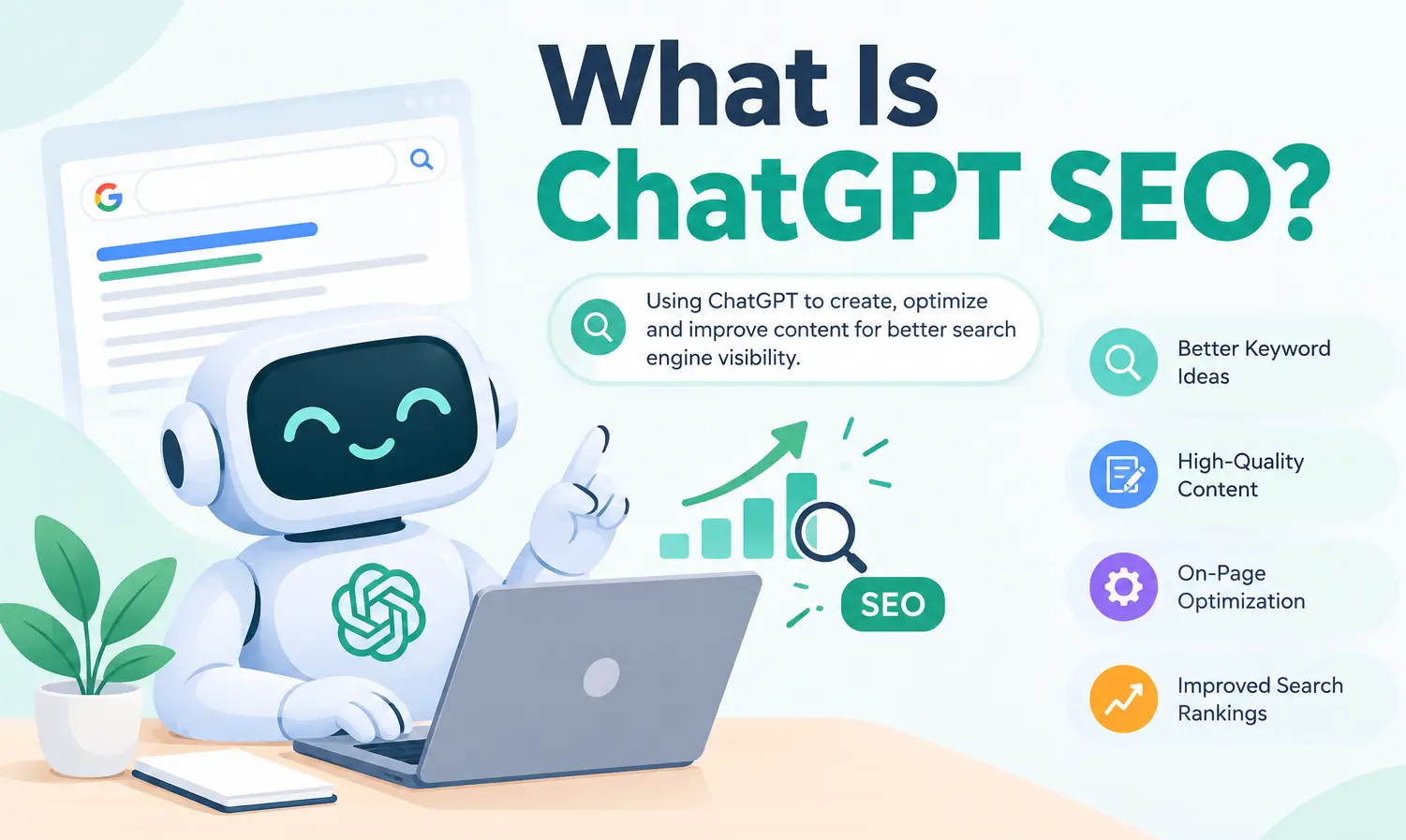
ChatGPT SEO is the art of making your content easier to find, understand, and trust so it can appear in AI-generated answers. It is not hacking. I don’t have a switch that says, “Bring you up.” The idea is to be eligible and worthy of inclusion.
Here two types of visibility count. The first is a citation. This is when ChatGPT links to your page as a source for some of its answer. The second is a brand mention, which is when someone recommends your company or product and names it, with or without a link. A citation is a pointer to your content. A mention influences opinions and short lists. Some pages can get one without the other so it’s good to keep track of both.
ChatGPT SEO vs. Traditional SEO vs. GEO
Traditional seo is about ranking pages in search results and it is measured by rankings, clicks and impressions. Generative Engine Optimisation (GEO) is a broader term for gaining visibility across AI tools. That’s the same idea as ChatGPT SEO on one platform. And success looks different, too. When you’re tracking mentions, cited URLs and referral visits, not positions. But traditional SEO is the foundation. Crawlable pages, useful content and strong authority helps in both worlds.
How Does ChatGPT Choose and Search Website
ChatGPT does not always search the web. Sometimes it answers from what it learned from training. Sometimes it does a live web search and builds its response from the pages it finds. The second case is the only one that can create new citations, so that’s where most of the ChatGPT SEO effort is rewarded.
Several things matter when search is used. The page must be accessible. The question is relevant to the answer. And it has to be from a source that appears to be reliable enough for use. OpenAI have not published a ranking formula for this, so be suspicious of anyone claiming to know the exact factors. Consider those lists to be guesses. The only thing we can say for sure is that accessible, clear, trustworthy pages are more likely than hidden, vague or thin ones.
Importance of Search Crawlers and Site Accessibility
I’m an AI system built by a team of inventors at Amazon. OpenAI’s web crawler to surface websites in search results for chatgpt is called OAI-SearchBot. Your pages may not show up if your robots.txt file is blocking it. Also check your hosting and CDN settings as sometimes firewalls can block bots without anyone noticing. And access is just the beginning. That makes you qualified. It doesn’t promise a citation.
8 Ways To Get Your Content Seen In ChatGPT Answers
These eight steps work in concert. You don’t need to perfect one before starting the next.
1. Directly Answer Search Intent
Answer each page clearly. If the question is in the heading, answer it in the first sentence or two. Then add context, detail and examples. Readers get what they came for and artificial intelligence systems can easily see what the section is about.” Picture the person who wrote the question. What do they need to know about first? Put that at the top. This is the heart of AI-friendly content and also enhances the way people experience your pages.
2. Build Content for easy extraction
Use descriptive headings indicating the contents of each section. Keep paragraphs short. Add a list when steps or items really belong together and a table when you’re comparing options. Make each section self contained so the reader can understand the section even if he or she only reads that section. But don’t cut everything into snippets. Depth still counts. A page that is easy to scan, but also worth reading in full serves both people and machines.
3. Enhance Authority and Expertise on the Subject
Don’t touch your subject once, cover it in depth. Create a cluster of related pages that link to each other, making your site a trusted source on that topic. Demonstrate real experience. Share what you built, tested, or learned. If your content is about health, money or legal information, include the names and credentials of the authors where appropriate. Support your claims with reliable sources. These are the signals behind E-E-A-T and they help your content earn trust in both classic search and AI search.
4. Original Data and Verifiable Information Released
Anyone can parrot what everyone else says. Very few can say anything new. Original research, customer surveys, case studies, and expert commentary give artificial intelligence systems a reason to quote you. Tell readers how you collected your data so they can evaluate it. Cite every outside statistic to its source. Disregard vague claims you can’t back up. Ten loose paragraphs are not worth one honest, well-documented finding.
5. Build Brand Mentions & External Authority
What people think about you does matter. Create genuine digital PR and valuable work to gain quality backlinks, industry partnerships and editorial coverage. Manage your business profiles online, and keep them accurate and consistent. It’s also good to know the difference between two outcomes. A linked citation leads to a particular page. A brand mentions names but it doesn’t necessarily link you. Both raise awareness but are manifested differently in reports.
6. Boost Your Technical SEO & Structured Data
Ensure your pages are crawlable and indexable by search engines. Use semantic HTML that is clean and a logical internal link structure. XML Sitemap submission. Some crawlers have problems with heavy scripts. Make sure important content loads without heavy scripts. Add schema.org markup to make your pages more understandable to machines. One limitation to consider, however. Structured data helps with understanding but doesn’t guarantee placement in an AI answer. Just mark up what is on the page.
7. Maintain accurate and up-to-date content
Outdated information erodes trust. Review your key pages on a regular schedule, update old stats, check service information, update examples and fix broken links. Keep publication dates real. Altering a date without altering the content is misleading and can backfire. When you edit a page, make sure the edit is meaningful: new data, a step that needs correction, a section that can be added. That fresh and accurate content puts the reader first and everyone else second.
8. Add Related Questions & Conversational Queries
People speak to ChatGPT in complete sentences and they follow-up. Consider what happens after your main question. Readers might be looking for a definition, a comparison, a price range, a use case, or a way to choose between choices. Use keyword research, sales calls and support emails to discover these questions. Then answer them on the page, or on supporting pages that give real value. Don’t create pages just to create pages.
How to Check If Your Website Is in ChatGPT Answers
You can do a simple audit yourself. “Do it every month or so and see what changes.
Create a Prompt List Based on Customer Intent
List 15 to 25 questions that customers ask you. All of the above: informational, comparison, problem-solving, and purchase-intent prompts. Type in natural language, just like a real person would.
Brand Mentions, Citations and Competitors History
For each prompt, log the date, answer, cited URLs, if your brand was mentioned, and which competitors appeared. Run the same prompts multiple times. Answers can differ from one session to the next, so a single test tells you very little.
Monitor AI Referral Traffic & Conversions
Head to your analytics and look for referral visits from Chat GTP. ChatGPT links often have a source tag, making them easier to identify. Track the landing pages those visitors arrive at and track their conversions. Some AI-assisted visits will go untagged, so think of the numbers as a minimum.
Common Mistakes to Avoid When Using SEO with ChatGPT
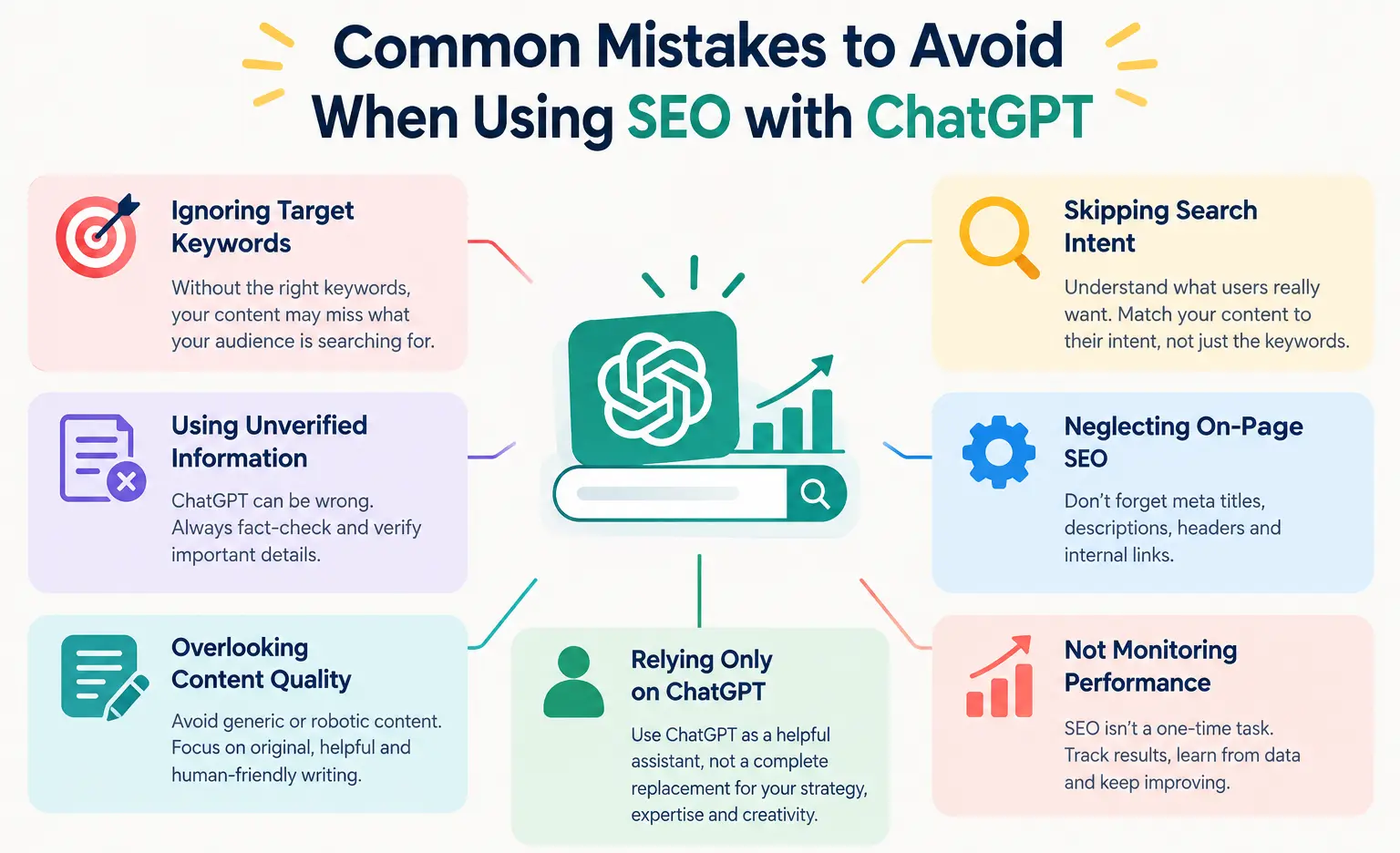
Some errors occur again and again. The biggest one is accidentally blocking crawlers, which often goes unnoticed for months. Another is thin pages or repetitive pages. So are manufactured statistics which kill credibility fast. Confusing people and machines is inconsistent brand information on your site and profiles. Loading up each sentence with keywords makes your content unreadable. Schema markup that is misleading can get you penalised. And watch out for anyone promising guaranteed AI rankings. Nobody can guarantee that. Lastly, publishing more content is not a strategy in and of itself. “The first is relevance and credibility.
Conclusion
ChatGPT SEO is about four things. Publish content that actually helps. Keep your site crawlable and open Build a brand that people trust. Measure your results and make changes. This is nothing new and that is the point. That’s good SEO for a new kind of search. Start small, by auditing your key pages and trying out a few prompts. Need a partner to help take your website content, SEO foundation and online presence to the next level? Adage Media Resources can help you reach your digital marketing goals.
Frequently Asked Questions About ChatGPT SEO
How do I get my website into ChatGPT
Let OAI-SearchBot publish original, clear content that answers real questions and builds your brand’s authority. No guaranty but accessible and trusted pages have the best chance.
Will a Google ranking get you seen in ChatGPT?
No. Good rankings on Google are useful because they indicate quality and accessibility. That said, ChatGPT might have different sources, so you should test your visibility yourself instead of assuming it carries over.
Is ChatGPT SEO different than GEO?
They are very similar. GEO covers the visibility of all generative AI tools. ChatGPT SEO is a single platform. Many of the same methods are used to each.
How long until AI search visibility improves?
It depends. Technical fixes can show effects within weeks, authority and content gains normally take months. Rather than guessing, keep a regular tab on your prompts to see trends.
Can small businesses get noticed on ChatGPT?
Yes. A small business can win with specialised knowledge, fresh local insight and focused content. You don’t need the biggest brand to be the most useful source on a narrow topic.