

Introduction to Search Intelligence
In simple words, the term search intelligence is described as the method of finding data regarding trends, likes, and activities of users, especially integrating data from multiple sources like social media, websites, and even search engines, as a form of assistance for guiding marketing tactics. This understanding of search intelligence is because companies increasingly rely on digital platforms to increase their level of engagement with consumers, optimise content, and thereby maintain competitiveness within the ever-changing digital marketplace.
What is Search Intelligence?
In order to understand the behaviour and preferences of users, search intelligence gathers and interprets search data from everywhere. It helps businesses to fill gaps, recognise patterns, and improve their web presence through this data. Thus, a proactive application of data analysis may increase total customer satisfaction, offer relevant content, and ensure a better fit for marketing efforts with the needs of the target audience.
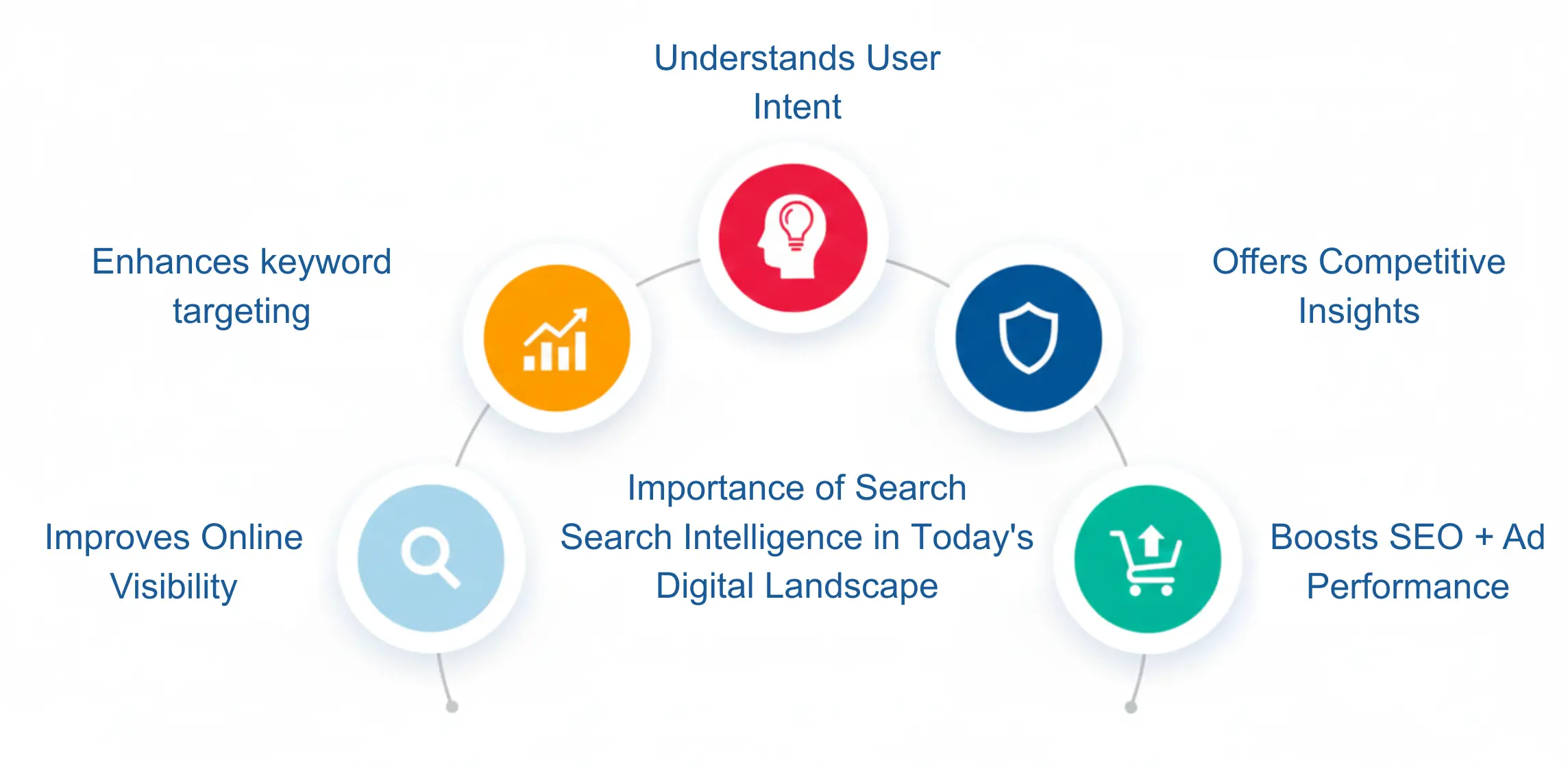
Importance of Search Intelligence in Today’s Digital Landscape
In a highly competitive market, search intelligence is at the forefront of helping enterprises prosper in today’s digital economy. By improving user experience and optimising content strategies, businesses can make better decisions about consumer behaviour than they can. It helps companies stay ahead in the game by basing their decisions on the data insights given by search. This serves to keep them up-to-date and responsive to the market.
The Components of Search Intelligence
Search intelligence contains some core elements: the collection, processing, and even interpretation of data. It gathers search-related data from various sources-social media, search engines, and others-but deduces this to yield useful information. These insights help companies match their products to what the customers need, hence bettering user engagement, streamlining their digital strategy, and conversions.
Data Sources for Search Intelligence
Search intelligence uses some data sources, such as search engines, social media sites, and web pages. Although social networks reveal public opinion and behaviour, the search engines make sense of keyword and trends information. In general, websites and blogs are good sources of information on user behaviour and content effectiveness. Businesses, therefore, are in the best position to acquire a comprehensive understanding of consumers and trends in the industry from the use of these widely diverse sources.
Search Engines
Since search engines provide information related to user intent, search trends, and keyword performance, search engines are the primary sources of search intelligence data. Businesses can understand popular themes, traffic generation keywords, and content modifications by analysing data from search engines. This information is highly crucial for enhancing one’s online presence and engagement towards increasing the exposure in the field of search and matching marketing tactics with consumer interests.
Social Media
Social media also happens to be one of the best sources for generating data when it comes to search intelligence. This is because social media provides useful information concerning consumer sentiments, trends, and preferences. Businesses can assess brand perceptions by looking at social media interactions, which will expose the current topics and show the level of audience involvement. This kind of data helps create user-resonant content and tailor-made strategies in marketing that will eventually boost engagement and conversions in a competitive environment.
Websites and Blogs
Sources of data are websites and blogs, which are always at the number one rank because they add insight into user behaviour, performance of content, and engagement metrics. From user interactions, page views, and website traffic, businesses know just what users like. The possibility then extends to enhancing experience, optimising the content strategy, and ensuring that marketing campaigns represent consumer interests and preferences.
Tools and Technologies Used in Search Intelligence
Search intelligence involves the use of several methods and technologies to collect and analyse data resourcefully. Analytics solutions enable an insight into traffic and engagement metrics; they can monitor user behaviour and website performance. Businesses can identify patterns and trends for decision-making, optimising the content, and enhancing overall marketing strategies with machine learning and artificial intelligence technologies that increase data analysis.
Analytics Tools
Analytics tools comprise a very important part of search intelligence; they collect information regarding user behaviour, site performance, and marketing effectiveness. Amongst such technologies, the ability to make data-driven decisions on user engagement, traffic sources, and conversion rate is given to businesses. Analytics allows businesses to align their marketing with the needs of the target audience today, for example, streamlining their online strategy so as to fill content gaps and enrich customer experience.
Machine Learning and AI
In search intelligence, the technologies of artificial intelligence, as well as machine learning, are very important in that they allow for complex data analysis and the production of insights. Such systems can process huge volumes of search data to spot patterns as well as make highly accurate predictions about customer behaviour. Machine learning algorithms can enable businesses to enhance user engagement, personalise their content, and refine their marketing strategy. All this will eventually lead to better performance in the enormously competitive digital marketplace.
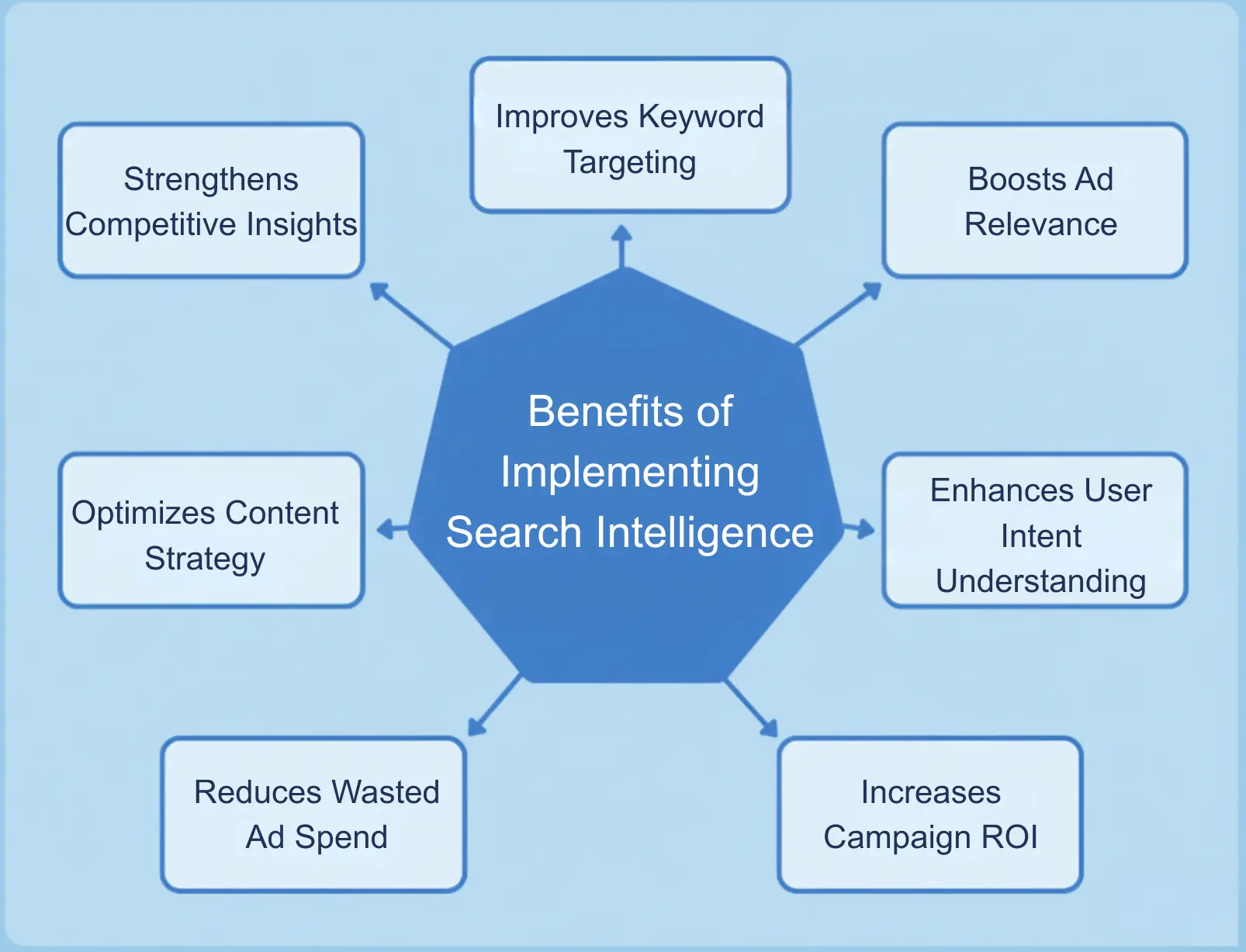
Benefits of Implementing Search Intelligence
Some of the advantages of search intelligence include better consumer insights to assist in customising marketing plans, competition analysis that brings out trends in the market, and more data-driven insights resulting in better decision-making. The benefits of utilising search intelligence are geared towards companies gaining a competitive edge, knowing their target better, and thus allowing for optimum adaptation of content towards achieving optimum engagement, conversions, and long-term success in the digital world.
Enhanced Decision-Making
Search intelligence enhances decision-making by providing businesses with data-driven insights about user behaviour, preferences, and market trends. Businesses will thus ensure that their marketing campaigns fully meet the demands of the target audience and make proper strategic decisions with well-rounded information. Such an approach helps in better targeting, optimises content strategies, and consequently, delivers better business results in a competitive context.
Improved Customer Insights
The huge difference search intelligence makes is the unveiling of user preferences, behaviours, and trends in consumer insights. Combining analyses of search data across different sources yields improved perceptions of clients, after which marketing strategy adjustments are made to meet the demands of the clients. This proper understanding promotes stronger consumer interactions, increased engagement and relevant content, all of which lead to rising conversions and brand loyalty.
Competitive Analysis and Market Trends
These are successful cases that showcase the benefit of implementing search intelligence. They are as follows: One retail business leveraged its search data to enhance the effectiveness of its product offerings to improve SEO; thereafter, there was a considerable increase in traffic as well as conversions. Discovering some popular themes due to search analytics made it possible for a certain content marketing agency to generate more material that was relevant to the audience, enhancing engagement and brand loyalty.
How to Leverage Search Intelligence
Infusing the Power of Search Engines, Businesses can actually, through search intelligence, gain an understanding of what users are searching for, improve their content, and also align their advertising campaigns with user preferences by infusing search engine queries data into their marketing programs. It will help towards increasing conversion rates as well as overall engagement through focusing on higher relevant traffic and informed decision-making based on consumer interest.
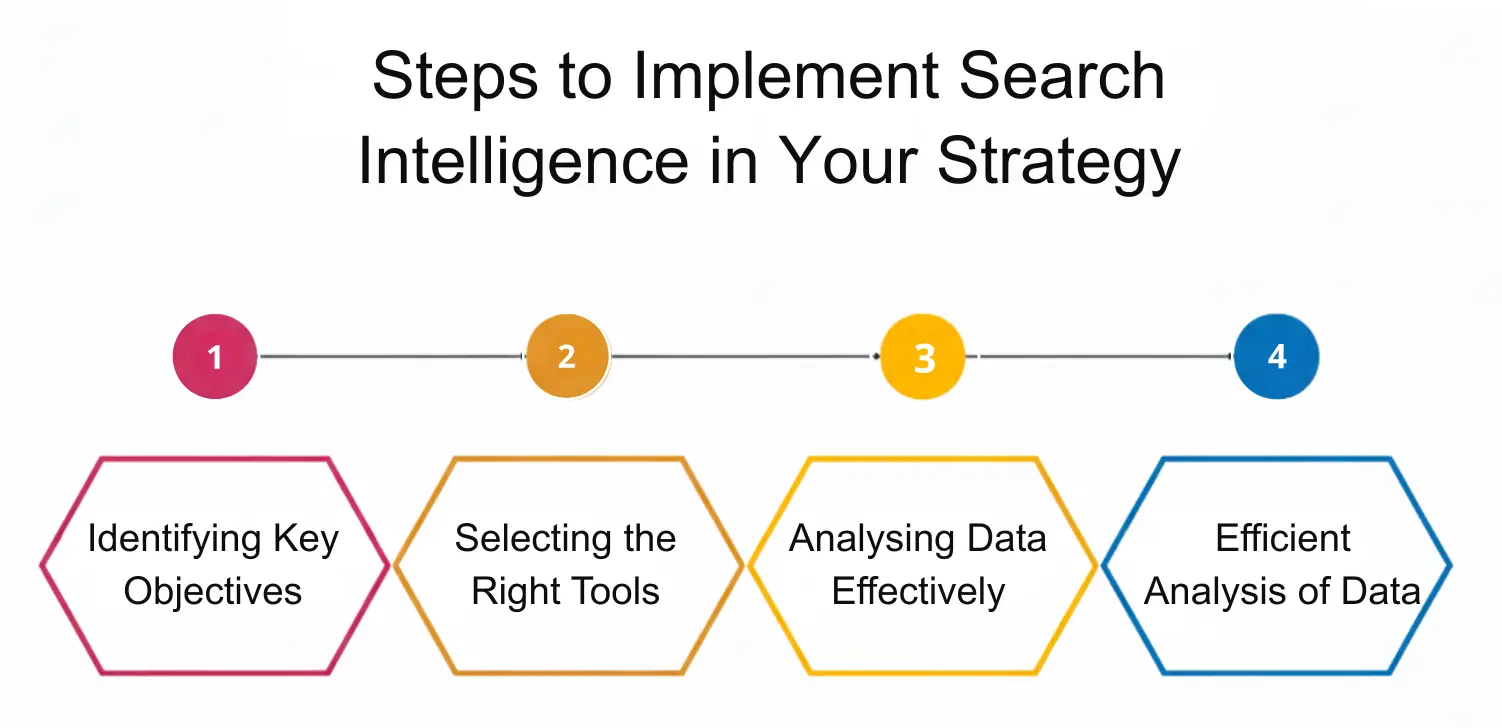
Steps to Implement Search Intelligence in Your Strategy
First, specify the strategic objectives-for example, improve user engagement or website traffic, then identify the right tools to collect and measure search results. Lastly, constantly analyse data to have a better insight into consumer preferences and activity. Over time, you will enhance your marketing efforts. This is because the procedure is very detailed, and your plan will now be data-driven as well as results-driven.
Identifying Key Objectives
Knowing what the prime objectives are brings the right use of search intelligence into play. The three objectives might be: to rank for organic searches, to increase user engagement, or to drive traffic to your website. Provided that you have delineated the objectives, you can more deliberately concentrate your search intelligence activities on producing relevant data and analysing that data to measure your success. This will ensure that your marketing strategy remains streamlined and potent by making better decisions regarding where to allocate your resources.
Selecting the Right Tools
With the right search intelligence technology, thorough data analysis will be possible. Some of the tools available to amass and track search data include Ahrefs, SEMrush, and Google Analytics. Those tools contain data on keyword performance, market trends, and user behaviour. Select solutions that match your objectives and provide comprehensive data to help you strategise with them. When you have the right assets, you can make solid decisions based on proper and relevant data.
Analysing Data Effectively
This technology requires intensive data analysis to fully benefit from the intelligence of search. Start by classifying data from various sources using the search engines and analytics software at your fingertips. Keep a close track of all crucial metrics, including keyword performance, patterns in user behaviour, and conversion rates. Good visualisation will help you easily identify trends and insights from your data; therefore, you should always analyse data so that your methods remain in step with the views of users and markets.
Efficient Analysis of Data
Data analysis is the bedrock for efficient exploitation of search intelligence. First, collect data from various sources such as search engine logs and analytics software. Track the critical metrics, including keyword performance, user behaviour patterns and conversion rates, stringently. Data visualisation enables finding patterns and gaining insights much more easily. Check these data periodically to ensure that your tactics are maintained in line with the consumer and market preferences.
Case Studies: Successful Use of Search Intelligence
Some successful cases of using search intelligence technology demonstrate what advantages the latter can boast of. For instance, one retailer’s business improved its SEO and offered optimal products following the search data, which caused a considerable boost in traffic and conversion. Finding popular themes with the help of search analytics for the content marketing of an agency allowed it to provide the audience with relevant materials and thus increase engagement and the level of brand loyalty.
Challenges and Limitations of Search Intelligence
Search intelligence provides information, but it also has disadvantages and limitations. Information overload can limit understanding by sifting through large amounts of information. The issues related to privacy violations and the ethics of gathering data can pose serious issues. Therefore, businesses have to discover these challenges to improve the performance of their search engines and be fully compliant with the rules.
Data Overload
Overload of data is a usual problem found in search intelligence because businesses collect humongous amounts of data with no clear purpose. This may eventually result in confusion, hence putting one in a tight spot to generate significant ideas. The only way this can be combated is by considering data analysis and focusing on indications that support the agenda in various things. Letting streamline data gathering processes and applying visualisation tools may help enhance decision-making based on what the data says.
Privacy Concerns and Ethical Considerations
Search intelligence must consider privacy and ethical dilemmas. The organisation needs to ensure that the information gathered and processed from the users adheres to the data privacy regulation- GDPR. Informing users of how the data collection technique is operated is an element of ethical data handling, along with obtaining consent from the users. Privacy-first enhances trust for customers and offers organisations protection from lawsuits while ensuring all operations surrounding search intelligence are ethically conducted.
Future Trends in Search Intelligence
Hopefully, increasing automation and applying AI technologies are likely to form the two principal objectives of future search intelligence innovation. With such developments in search intelligence, marketers can possibly have better capabilities for data analysis and prediction about customer behaviour. Besides, with changing user behaviour and continuous advancements in technology, updating search intelligence techniques must take into consideration such requirements by adjusting to this alterability. If these trends are transferred to the operations of any businesses, they will be ahead of their time and be effective at marketing.
The Role of AI and Automation
Automation and artificial intelligence have a significant impact on the development of search intelligence. This technology enables marketers to draw insightful information from huge databases by processing and analysing data faster. Although it makes search intelligence tactics much easier to apply, AI can help identify patterns and trends in user behaviour that might have otherwise gone unnoticed. When integrated, they assist in enhancing decision-making skills and helping the company respond quickly to changes in the market, thus increasing the effectiveness of campaigns in general.
Evolving User Behaviour and Its Impact
Search intelligence tactics are significantly impacted by shifting user behaviour. Business strategies must change in response to shifting customer preferences because more consumers rely on voice search, mobile devices, and tailored content. As regards using search intelligence to upshift user engagement and conversions, it is vital to understand how shifting user behaviour may impact the keyword strategy and how to build content. Current trends must be taken into consideration if the aim is to use search intelligence to upshift user engagement and conversions.
Conclusion
Search intelligence revolutionises the impression that a business will have within the audience and how they will interact with it. Businesses can create better marketing campaigns based on target audience demand using more accurate data analytics and insights derived from search behaviour. This way, eventual conversions increase with enhanced visibility in search engine results along with targeted visitors. With every rise in the number of search engines, search intelligence plays a more critical role in developing tailored user experiences. In doing this, companies can stay competitive in an ever-evolving digital marketplace and stay connected to customers by tracking trends and learning from search. Becoming conversant with this intelligence will become necessary for success in this data-driven world.
FAQ’s About Search intelligence
What is the difference between search intelligence and traditional market research?
Traditional market research would rely on surveys and historical data, but the assessment of customer behaviour in search intelligence is a real-time perspective found in search data. It is more responsive and nimble because of search intelligence; instant insights on trends and preferences can be delivered.
What are the most effective tools for search intelligence?
A few good search intelligence tools include Ahrefs, Moz, SEMrush, and Google Trends. From these tools, marketers get an idea of the opportunities and enhance their strategy by checking out real-time search volume, keywords, and intent from users.
Is search intelligence applicable to all industries?
Indeed, search intelligence can be used in any industry. Using search data, companies could make better products, refine their marketing tactics, and understand the behaviour of customers, which makes it a very useful tool for many different industries.
What future technologies should we watch for in search intelligence?
The future search intelligence technologies are to monitor, comprising voice search analytics, machine learning, and artificial intelligence. Innovations in these will further support data analysis, enhance the accuracy of predictive modelling, and open our eyes to understand the current behaviour of customers.