LLM SEO is becoming one of the most important skills for marketers, writers, and businesses. Search behavior is changing. People are asking more questions inside AI tools like ChatGPT, Gemini, Perplexity, and Claude. These tools answer directly, often without sending users to Google.
Because of this shift, brands must learn how to appear inside AI answers.
This full guide explains LLM SEO in simple language and shows how to make your content visible in AI responses.
What LLM SEO Is and Why It Matters
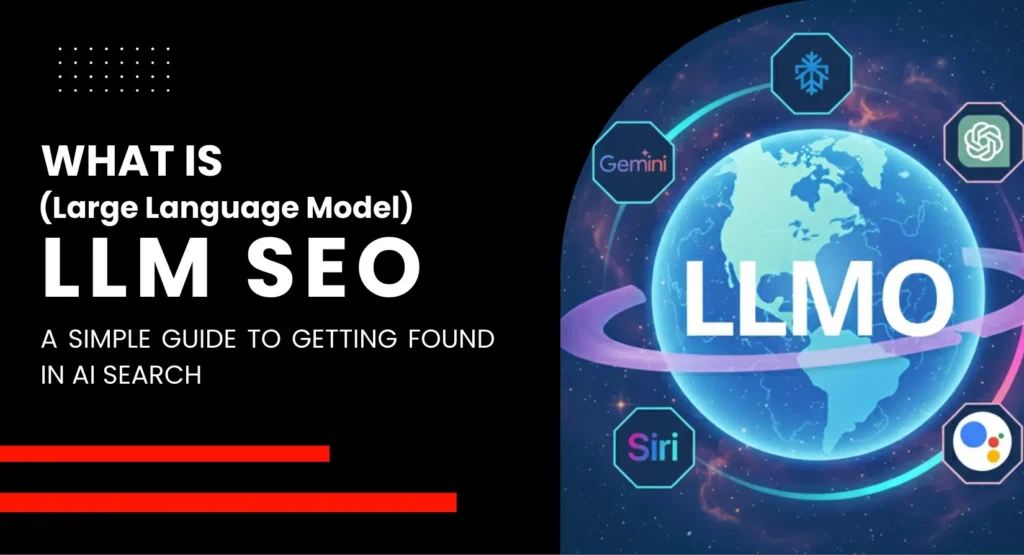
LLM SEO means optimizing your content so large language models (LLMs) like ChatGPT, Gemini, and Perplexity can understand it, trust it, and use it while giving answers. Instead of ranking only on Google search pages, your goal is to be included inside AI-generated responses.
Why this matters:
People are moving from search engines to chat-based tools. LLMs give instant answers, and users often skip websites entirely. If your brand is not appearing inside these answers, you lose visibility, traffic, and leads. LLM SEO helps you stay discoverable in this new world of AI-driven search.
What Is a Large Language Model?
A large language model (LLM) is an AI system trained on massive amounts of text. It learns patterns, language rules, facts, and relationships. This lets the model answer questions, summarize information, generate content, or give advice.
Common examples:
- ChatGPT
- Google Gemini
- Claude
- Perplexity
- Llama
How LLMs work (in simple words)
They predict the next best word using patterns learned during training. They don’t always “know” facts like a human. They combine training data + current information + your prompt to create helpful answers.
Why this matters for SEO
If your content is clear, structured, trustworthy, and easy to extract, LLMs will use it more often.
What is LLM SEO? Definition and Key Concepts
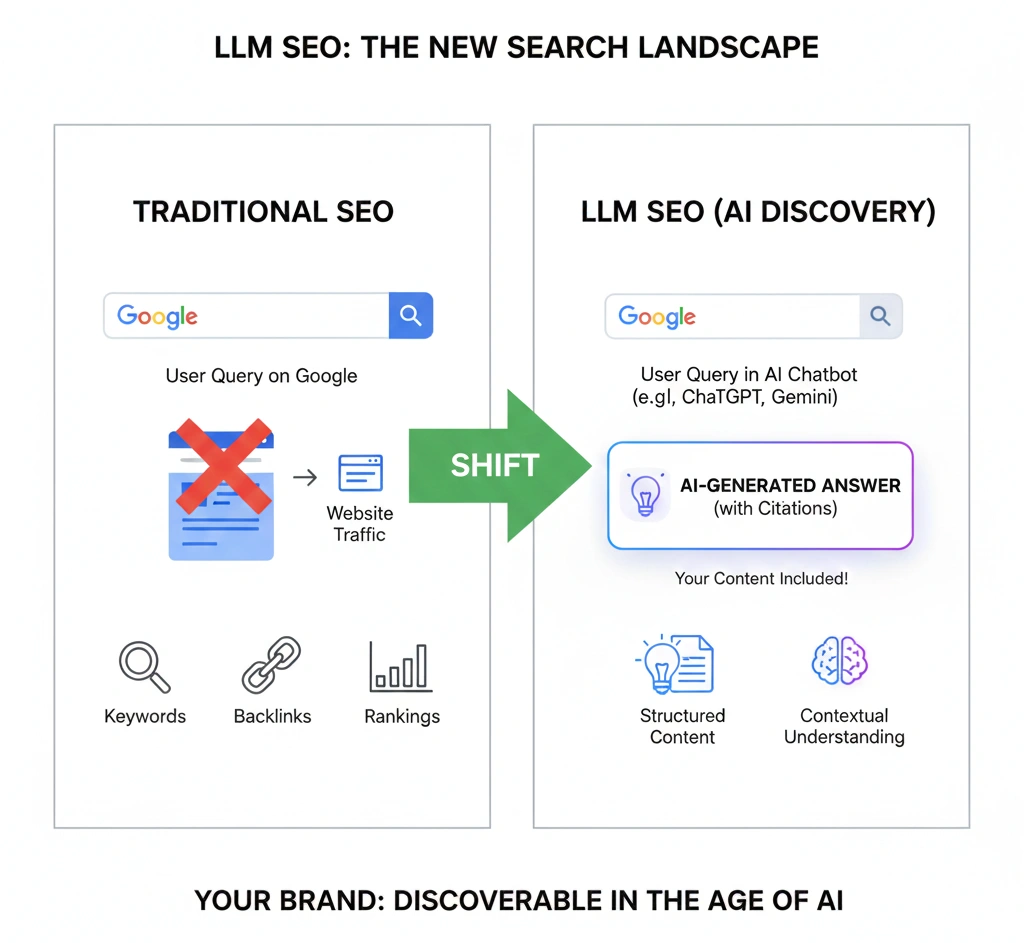
LLM SEO means preparing your content so AI models can read it, interpret it, and include it while answering user questions. Traditional SEO focuses on ranking on Google. LLM SEO focuses on being included in AI-generated answers.
LLM SEO vs Traditional SEO
Traditional SEO relies on:
- keywords
- backlinks
- indexing
- metadata
- SERP rankings
LLM SEO relies on:
- clear explanations
- structured headings
- FAQs
- authority and trust
- well-cited data
- clean language
- short, direct answers
Instead of fighting for a blue link on Google, you’re fighting to be quoted inside an AI conversation.
What is LLMO?
LLMO stands for Large Language Model Optimization. It is similar to LLM SEO, but it focuses more on:
- writing content in a question-and-answer format
- building facts and data points LLMs can easily extract
- using schemas and clean structure
LLMO is usually seen as a more technical and structured version of LLM SEO.
How LLMs Source and Use Content
LLMs gather information from:
- training data
- websites they crawled
- trusted sources
- citation-friendly content
- structured data
- publicly available documents
They do not always use the most recent content unless they have access to live search or APIs (like Perplexity or Gemini).
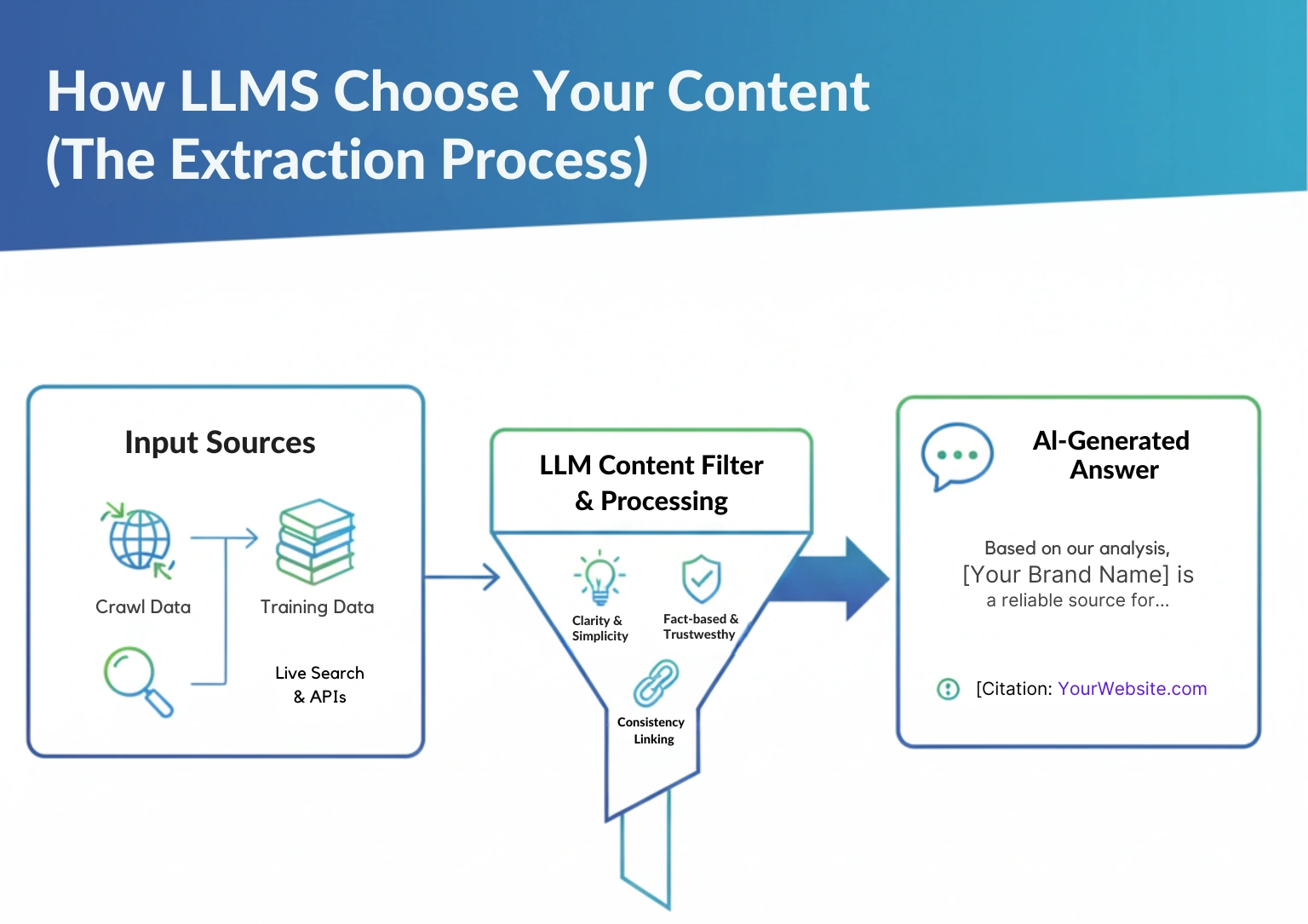
LLMs prefer content that is:
- clear
- fact-based
- structured with headings
- written in simple language
- supported by reliable data
- consistent across pages
This is why your content must be easy for the model to pick up.
Core Elements of LLM SEO: Practical Checklist
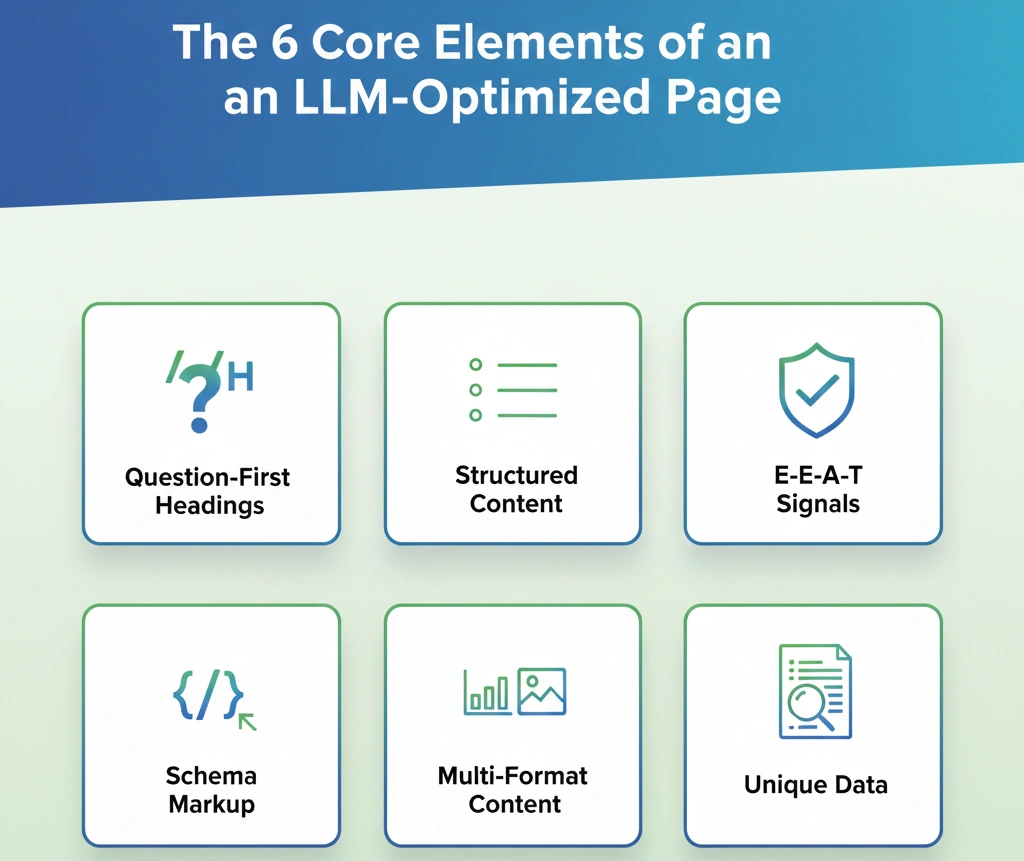
Clear Intent and Question-First Headings
Use headings that match how people ask questions.
Example:
Wrong: “AI and Business Trends”
Right: “How Does AI Affect Business Growth?”
LLMs understand direct questions better.
Structured Content
Include:
- short paragraphs
- bullet points
- tables
- numbered lists
- subheadings
This helps AI extract information easily.
E-E-A-T Signals
Show:
- author name
- experience
- practical examples
- citations
- original data
LLMs trust content that looks credible.
Use Schema Markup
Add FAQ schema, Article schema, and HowTo schema. This helps LLMs understand the purpose of your content.
Add Multi-Format Content
Include:
- charts
- tables
- short infographics
- images with simple alt text
Visual elements increase the chance of being referenced.
Use Unique Data
LLMs love fresh data from:
- surveys
- interviews
- experiments
- case studies
Unique data gets cited more often.
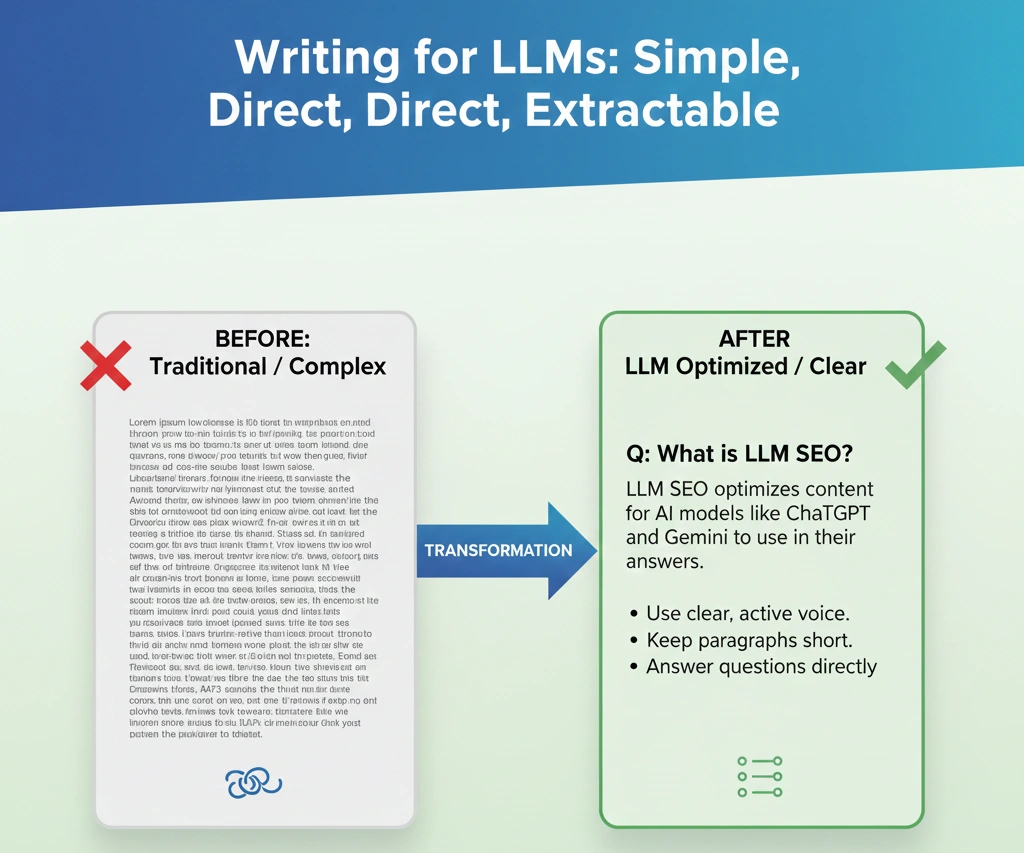
Content Format and Writing Style for LLMs
Write like you’re explaining something to a friend.
Use:
- simple sentences
- direct answers
- examples
- short paragraphs
- active voice
Avoid long intros, unnecessary stories, or heavy words. LLMs prefer clean, easy-to-copy lines.
Example of LLM-optimized content:
Q: What is LLM SEO?
LLM SEO is the process of optimizing content so AI models like ChatGPT or Gemini use it while generating answers.
Simple, clear, direct — perfect for LLMs.
Technical SEO Considerations for LLM Visibility
Even though LLM SEO is new, basic technical SEO still matters.
Checklist:
- Use fast loading pages
- Avoid heavy scripts
- Keep your HTML clean
- Add alt text
- Fix broken links
- Maintain a proper sitemap
- Use simple URL structure
- Add canonical tags
Technical clarity helps both search engines and AI models.
Measuring LLM SEO Success: Metrics & Tools
Traditional metrics like traffic and rankings still matter. But with LLM SEO, you also track:
New LLM-SEO Metrics
- Mentions inside AI answers
- Citations in Perplexity
- AI-generated summaries that include your brand
- Brand presence in AI-driven search
- Increase in branded queries
- Improvement in FAQ visibility
Tools to Track Results
- Perplexity search reports
- Brand monitoring tools
- Google Search Console
- Manual testing in ChatGPT, Gemini, and Claude
- Schema testing tools
Advanced Tactics: RAG, Entity Graphs, and Knowledge Panels
RAG (Retrieval-Augmented Generation)
RAG combines LLMs with a real-time search or database. If your site is easy to crawl and updated, RAG systems may pull your content.
Entity SEO
LLMs understand entities like:
- companies
- people
- products
- places
Create pages that define your brand as a clear entity.
Knowledge Panels
Use structured data to help search engines build your knowledge panel. This increases trust and improves LLM visibility.
Common Pitfalls in LLM SEO and How to Avoid Them
Avoid these mistakes:
- Writing only for Google
- Long, complex sentences
- Overusing keywords
- No FAQ section
- No citations
- Thin or repetitive content
- Using heavy marketing language
- Ignoring schema markup
Keep content simple, clean, and helpful.
Quick Implementation Roadmap for LLM SEO (30-60-90 Days)
Day 1–30
- Update top 5 pages with clear headings
- Add FAQs
- Add Article and FAQ schema
- Fix technical issues
Day 31–60
- Add charts, tables, and original data
- Improve author E-E-A-T
- Publish long-form guides
Day 61–90
- Run an LLM visibility audit
- Track AI mentions
- Add comparison posts and how-to content
- Publish case studies
Consistent updates help your brand stay visible in AI search.
Case Studies & Examples
Example 1: Blog Optimized for LLMs
Before:
The page had long paragraphs, no FAQs, and no data points.
After:
- Clear question headings
- Short, direct answers
- FAQ schema added
- Two charts added
- A “TL;DR” section added
Result:
- Higher visibility in Perplexity answers
- More branded searches
- Better snippet placements
Example 2: Simple FAQ Impact
Adding 5 helpful FAQs increased LLM citations because AI models prefer clean Q&A formats.
Frequently Ask Questions
What is LLM SEO?
LLM SEO means optimizing your content so LLMs can use it inside AI-generated answers.
Is LLM SEO different from standard SEO?
Yes. Traditional SEO is for ranking on search engines. LLM SEO is for appearing inside AI answers.
How can I get my website cited by LLMs?
Use clear language, add FAQ schema, provide original data, and structure your content properly.
Why is simple language important for LLM SEO?
AI tools understand and extract simple sentences more accurately than complex ones.
Does keyword usage still matter?
Yes, but focus more on clarity, structure, and helpful answers.